Thursday, October 23, 2008


Recessed Lighting Plans


What is the best way to approach a recessed lighting plan?
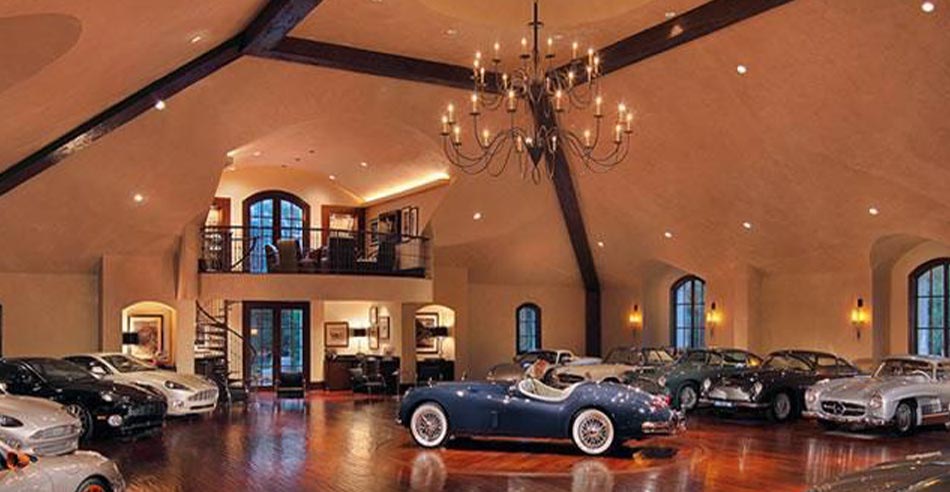
You should plan your recessed lighting system from a three-dimensional perspective of your home’s interior architecture. Key elements such ceiling height, the overall size of the room, the number of windows determine the amount and the direction of lighting in the room. Other fixtures you hang from the ceiling, such as chandeliers and pendants, also play a major role in how recessed lighting complements preexisting layers of general light. Elements like room color, decorative accent lighting color, fine art, and interior design plans also help you determine what types of lamps and lens designs to use as recessed lights.

What is the most important element of recessed lighting to keep in mind?
The technique that lighting designers refer to as the "pooling of light." Because recessed fixtures direct light downward from circular or semi-circular housings, they create circles of on whatever surface they illuminate. When a number of these lights are installed together, they form overlapping pools of light which create uniform layers of general lighting. When recessed lights are selectively or individually installed, the reverse is true. The pools of light act have a “spotlighting” effect that works very well with a number of art lighting scenarios and decorative plans. Regardless, it is paramount to develop a point-by-point photometric lighting plan prior to purchasing and installing recessed lights. Because you are dealing with multiple layers of lighting combined together, it is crucial to mathematically calculate first how many fixtures you will need, the distance between your recessed lights, and the angle of incidence for the direction of each light.

Is recessed lighting the best way to illuminate a new interior design plan?
It is also best to coordinate a recessed lighting installation in conjunction with your interior design plans. If you are working on a new home build out, think ahead to how you plan to decorate each room of the home. Visualize your new home’s interior ahead of time and try to imagine which areas will most benefit from general ceiling lighting and which decorative elements will need special accenting and spotlighting. Planning ahead is even more important if you are remodeling your home. Some recessed light fixtures are made specifically for home remodel, and you need to have a profession firm install these to make certain they work harmoniously with your existing home wiring system.

What type of recessed lights should I have installed for general lighting?
You should pay close attention to the types of lamps you plan to install in your recessed fixture housings. Clear lamp halogen lights provide the best accent lighting, and they render color the colors of paintings, decorative arrangements, and vases with at a level nearly equivalent to daylight. Clear lamp halogens are not so good for general lighting, however. They highlight the outlines of objects too sharply, produce distinctive shadows, and will sometimes highlight skin problems and wrinkles. When used in general lighting plans that require a gentler dispersal of light, recessed halogen lights fitted with frosted lenses are a much better choice.

If you are trying to figure out how to plan your lighting, contact us toll free at 800-863-1184 or locally at 713-863-1133. Illuminations Lighting Design’s signature design is a space where every lantern, sconce, chandelier, up-light and down light balances a room for its precise intent. Using sophisticated computer technology, we create that balanced design weeks, or even months before the fixtures arrive. When the lights go up, you will be truly amazed at how the beautiful interplay of light and shadow will make you feel at once inspired, and at ease. That is what good home lighting plan is all about.

We are located in Houston Texas but provide lighting and design services in Austin TX, El Paso Texas, San Antonio TX, College Station Texas, Beaumont TX, Dallas Texas, Midland Tx and points beyond.

Labels: , , , , ,

  • Digg my article
  • AddThis Social Bookmark Button

Tuesday, June 10, 2008


Ceiling Lighting


Ceiling lights are most effective when they produce multiple layers of light that provide a sense of sourcelessness to both task and decorative lighting types. Ideally, ceiling lighting should minimize the physical appearance of fixtures and create an even distribution of general lighting that maintains at all times appropriate levels of light necessary in whatever environment they are located. With very few exceptions found only in purely decorative, aesthetic applications such as museum or public display lighting, ceiling lighting should disperse illumination with the intent of eliminating all visible pockets of shadows in the room. This is especially true in commercial lighting projects, but it is also very necessary for quality living space in residential settings. Likewise, while bright light is often necessary both in a home and a workspace, ceiling lights should be used that feature specification grade fixture designs and advanced optics and reflectors when appropriate. This optimizes the photometric capabilities of the lamps housed inside the fixtures, and it eliminates glare that can cause discomfort to human eyes. Finally, almost all ceiling lights should compliment function with form by adding a decorative touch to the room.

There are many different ceiling lights from which you can choose that conceal themselves as much as possible above the line of sight. Concealment, as we define it, is actually a matter of degree and never and absolute. No
architectural custom lighting in the ceiling is completely invisible if you stare straight up at the ceiling, so it is not necessary to waste time or money in an attempt to go to extremes of concealment. It works much better to find ceiling lights that take a “low profile” position in relation to the normal angles of view that people standing, walking, through the room or sitting in the room normally perceive. In order to correctly determine what types of fixtures you should use, whether they should be low voltage or line voltage in nature, and what number you will actually need really requires the assistance of a trained lighting consultant familiar with the many new technologies now available that can help your home or business save power, look better, and achieve new levels of décor previously unavailable even in purely decorative lighting. Working with professionals also gives you access to US-manufactured, specification grade ceiling lights that will last longer and perform much better than foreign equivalents and retail quality fixtures.

Glare and shadows are the two main enemies that work against you in virtually any
interior lighting design, and ceiling lights play a crucial role in the elimination of both. Like we mentioned earlier, there are SOME settings (such as statuary and 3-D abstract art lighting) where shadows are deliberatively generated by lighting specialists in order to create special effects. In most cases, however, the opposite is almost always the rule. Shadows and glare have to be eliminated at all costs. This is where ceiling lights can shine at their brightest, so to speak. Unlike lamps and wall art lights that can often be very focused and intense, many varieties ceiling lights work to create a general “wash” of indirect light that cascades down the walls and over the central areas of work and human traffic. This will eliminate the glare that is often caused by overly relying on singular, bright ceiling lights that shine direct lighting only down onto the room. Because this light resembles a soft, ambient field more than a direct beam of bright luminance, it also dispels shadows more effectively by shining light on all points of the room at once. When objects are “surrounded by light” in this manner, shadows have no place to linger.

After this general field of light has been created in the room, brighter, direct-lighting ceiling fixtures can then be added to selectively shine additional, brighter light on work areas, artwork, aisles, kitchen counters, and special rooms within a home. While commercial and residential lighting are two separate disciplines, ceiling lights used in one discipline are commonly found in the other. Furthermore, installing ceiling lighting fixtures controlled by one or more
Lutron wallbox dimmers or lighting control systems can exponentially multiply their effectiveness both functionally and aesthetically in both commercial and residential environments. Light control systems for homes and businesses can use the same set of ceiling lights to create multiple lighting effects and themes. Because there is always a practical element within aesthetic lighting, and some level of aesthetic sense intrinsic within task lighting, you can now adjust the "mix" of these two factors to become your own lighting designers simply by turning up one group of ceiling lights and turning down another. That’s sophistication at its finest and most convenient, and it is available to you now through Lutron distributors like Illuminations Lighting and Design to businesses and residents throughout Houston and Greater Texas.

Illuminations Lighting Design is the only “One Stop” destination for
lighting design services, engineering, landscape lighting services and installation in the state of Texas, and remains unrivaled by any lighting firm in the United States for lighting that is art. As homes grow larger and needs become more complex, having a single resource provides home owners with peace of mind. This translates into a smoother process, reduced costs and a better product.

Like fine wine, Illuminations has matured and become a classic for those
clients with a discriminating palate for comfort, mood and ambiance. Click here or call 1-800-863-1184 for an free consultation now.

Labels: , , , ,

  • Digg my article
  • AddThis Social Bookmark Button

Monday, March 31, 2008


Art Lighting as Art with Illuminations Lighting Design.


Can lighting be a form of art?
Yes, but in order to make
Art lighting a form of art in and of itself, you must first understand certain scientific and aesthetic qualities of light. Light functions as the supreme universal constant, because the speed of light is the fastest attainable velocity that can never be altered nor exceeded. Because light always travels in a straight line, any obstruction in its path casts a shadow. To some degree as well, light always reflects off any surface it strikes, and this is what makes it possible for us to see any work of art. Light also can fill a space without consuming it, making it possible to use any form of lighting as art provided the angle of incident is aimed correctly at the piece. Improper angles will not only create shadows resulting from light spillage, but they will create glare as the beam reflects off the surface of the work back toward the viewer’s eyes.

How do I completely eliminate glare and shadow?
You can’t completely eliminate glare and shadow in
artwork lighting, because no matter what you do, some light is going to reflect off the piece, and sooner or later, the light will encounter some sort of obstruction that casts a shadow.

What a skillful are lighting designer can do is create an angle of incident (the angle at which the light strikes an object) that will position any resulting glare and shadow outside of the viewer’s line of sight.

The old cliche “Out of sight, out of mind,” rings very true when approaching
art lighting as an art form unique unto itself.

How do I determine the correct angle of incident for my photography and paintings?
To do so, you or your
lighting consultant must think of angles from a three dimensional rather than a two dimensional point of view. Light striking the surface of art from a nearby fixture constitutes one angle of incident. The reflected light coming back to the observer constitutes a second. The two must be measured carefully in relation to one another if one is to determine the appropriate position of any picture lighting fixture. If the right balance is struck, then reflective glare and resulting shadow will be hidden from his or her line of sight, allowing for an uninhibited experience of light and art from that particular viewing angle.

What factors go into determining the ideal angle of incident?
The
art lighting interior designer must take several factors into account when installing an art lighting system. To begin with, the designer must pinpoint all points of observation within a room where viewers will possibly be standing when they view various works. These points will vary greatly according to the environment and the type of room involved. Vantage points in museums are very different from those in office foyers and private living rooms. Next, the fine art lighting company or designer has to look at the surface of the art itself to assess its reflective qualities. High-end photographs and many types of paint will many times cause the surface of the image to have a “sheen” that acts as a virtual mirror, casting not only reflected color back into the eyes, but portions of the light beam itself. Recessed lights equipped with dimmers are often required for such artwork in order to disperse illumination sufficiently not to shine back into the eyes.

Thirdly, one very essential aspect of
modern art lighting as art that many fail to even consider is the size and type of frame housing the piece. Lighting that comes from a fixture that is placed too high will can actually be blocked by the upper lip of the frame and cast what is called a “frame shadow” over the work. Often, something so simple as adjusting the level of the painting can often remedy this problem in home lighting projects, although in formal galleries this may not be an option, and special fixtures with complex reflectors and filters may be needed to create an indirect “wash” of illumination that results in both painting and frame being bathed in a radiant field of light as opposed to a bright beam of focused, direct light.

What is the best fixture to use if I want to design my art lighting as art?

Perhaps one of the most valuable tools available to the art lighting consultant is a
high-end art lighting projector that allows for precision lighting level adjustments, comes equipped with advanced lighting filters and special reflectors, and has the ability to proportionately size a beam to the precise dimensions of a work. Although this does not completely eliminate glare and shadow (which the laws of physics mandate are inevitable with any form of lighting), it does allow the collector or curator more power to control these negative elements, or in some cases, even turn them into art lighting attributes.

For example, many painters such as Goya, and certain genres such as surrealism, rely upon shadows to emphasize themes connected to the dark side of man, or the apparent duality of Nature itself. Placing too much light on such artwork will diminish its statement by overriding elements of shadow that the artist intended to be present.
Phantom art lighting projectors can be dimmed and adjusted for such works so as to create a “lighted from within” effect that preserves the artist’s use of dark elements and negative images, providing just enough visibility for the viewer to see the work and its key aesthetic elements.

Do you need help lighting art in your home or office?

Contact us to learn more about Illuminations Lighting Design and our fine art lighting services. We invite you to visit our lighting blog to learn more about the art of lighting art or call us toll free at 1-800-863-1184 now for a free consultation today.


Do you travel throughout Texas or just service Houston?
We are located in
Houston Texas but provide art, landscape lighting and home automation services in Austin TX, El Paso Texas, San Antonio TX, College Station Texas, Beaumont TX, Dallas Texas, Midland Tx and points beyond.

Labels: , , , ,

  • Digg my article
  • AddThis Social Bookmark Button

We are a full service lighting design build firm specializing in residential and commercial indoor lighting and outdoor landscape lighting installation, service and maintenance as well as home automation, home theaters and lighting control systems.


Click here to submit your question.


Google News
Phantom Lighting
Residential Lighting
Outdoor Lighting
Employment Opportunities
Nutritional Supplements
Gas Lanterns
Blogarama
Link 2 Blogs
Blog Explosion
Globe of Blogs
LED Lighting
Commercial Lighting Fixtures
Material Handling Equipment
Discount Automotive Tools


Commercial Lighting Supply
Athletic Sports Field Lighting
Lighting Design
Landscape Lighting
Electrical Contracting
Fine Art Lighting
Home Automation
Request Lighting Consultation


Artwork Lighting & Art Consultants

ILD 30 Years of Lighting Design Excellence!

Residential & Commercial Lighting Design

Lighting Design & Electrical Contracting

Houston Electricians & Residential Electrical

Houston Contractors & Residential Electricians

Illuminations Lighting Design Holiday Gift Cards

Transient Surge Suppressors & Voltage Surge Protec...

Houston Lighting Controls & Lutron RadioRa2

Fine Art Lighting & Art Lights


Powered by Blogger

Design Directory

Blogarama - The Blog Directory

blog catalog

Blog Flux Pinger - reliable ping service.


Enter your Email


Preview | Powered by FeedBlitz
        

1.800.863.1184

RSS

Texas' Only Full Service Lighting & Electrical Firm